



 by Mokolo Law
K-1 Fiancé Visa vs. CR-1 Spouse Visa: Which Is Better for You?
Planning a life together in the United States is exciting, but choosing the right immigration route can be complicated. For couples where one partner is a U.S. citizen and the other is a foreign national, two common options are the K-1 fiancé(e) visa and the CR-1 spouse visa.
Both can ultimately lead to permanent residency, but they work very differently. The right choice depends on whether you are already married, where you want to marry, how quickly you want to reunite, and how much additional immigration processing you are prepared to handle.
K-1 Fiancé Visa vs. CR-1 Spouse Visa
| Factor | K-1 Fiancé Visa | CR-1 Spouse Visa |
|---|---|---|
| Relationship status | Couple must be engaged | Couple must already be legally married |
| Main petition | Form I-129F | Form I-130 |
| Visa type | Nonimmigrant K-1 visa | Immigrant CR-1 visa |
| Where you marry | Marriage must take place in the U.S. within 90 days of entry | Marriage takes place before the spouse immigrates |
| Status upon entry | Enters as a fiancé(e), not yet a permanent resident | Generally enters as a permanent resident |
| Green card | Requires a separate Form I-485 after marriage | Permanent resident status is generally obtained upon entry |
| Work authorization | Requires additional processing after arrival | Generally available as a permanent resident |
| Number of immigration steps | More steps because of adjustment of status | Fewer post-arrival steps |
| Overall cost | Usually higher because of the second stage | Often lower overall |
| Best suited for | Couples who want to marry in the U.S. | Couples already married or willing to marry before immigration |
The key difference is simple: the K-1 gets a fiancé(e) to the United States to marry, while the CR-1 is for a spouse who is already married to the petitioner.
How the K-1 Fiancé Visa Works
The K-1 visa allows the foreign fiancé(e) of a U.S. citizen to enter the United States for the purpose of getting married. The U.S. citizen generally begins the process by filing Form I-129F.
Once the visa is issued and the fiancé(e) enters the United States, the couple must marry within 90 days. Marriage alone does not provide a green card. The foreign spouse must then file Form I-485 to seek adjustment of status.
That additional stage means more paperwork, additional costs, and another period of immigration processing.
For couples whose priority is having their wedding in the United States and being together before marriage, however, the K-1 route can make sense.
How the CR-1 Spouse Visa Works
The CR-1 route is designed for couples who are already legally married. The U.S. citizen spouse generally files Form I-130, followed by National Visa Center processing and a consular interview.
If the visa is approved, the foreign spouse can enter the United States as a permanent resident. Unlike the K-1 route, there is generally no separate adjustment-of-status application after arrival.
The CR-1 is therefore often attractive to couples who want fewer immigration steps after the foreign spouse arrives and want permanent resident status from the beginning.
Which Visa Is Faster?
There is no universal answer.
A K-1 visa may sometimes allow a couple to reunite in the United States sooner because they do not have to marry before beginning the fiancé visa process. But after arrival, the K-1 holder still has to marry and complete the adjustment-of-status process.
A CR-1 may take longer before the foreign spouse enters the United States, but the spouse generally enters as a permanent resident. Processing times can vary considerably depending on USCIS workloads, National Visa Center processing, consular backlogs, and other factors.
Which Option Is Right for You?
A K-1 visa may be worth considering if you:
- Are engaged but not yet married.
- Want to have your wedding in the United States.
- Want your partner to enter the U.S. before the marriage.
- Understand that a separate green card application will be required afterward.
A CR-1 spouse visa may be more suitable if you:
- Are already legally married.
- Are willing to marry before beginning the immigration process.
- Want your spouse to enter as a permanent resident.
- Prefer fewer immigration filings after arrival.
- Want to avoid the additional adjustment-of-status stage required by the K-1 route.
Talk to Mokolo Law Firm Before Choosing Your Immigration Route
Choosing between a K-1 fiancé visa and a CR-1 spouse visa is more than a question of which form to file. The decision can affect your wedding plans, total immigration costs, work authorization, travel, processing timeline, and the number of applications you will ultimately have to complete.
At Mokolo Law Firm, we understand that every couple’s circumstances are different. Our immigration team can review your relationship, immigration history, documentation, and long-term plans to help you determine which pathway is appropriate for your situation.
If you are unsure whether to pursue a fiancé visa or a marriage-based immigration process, do not make the decision based solely on processing time or online advice. A mistake at the beginning can create unnecessary delays and additional expense.
Contact Mokolo Law Firm today to discuss your case and take the next step toward building your future together in the United States.
Final Thought on K-1 Fiancé Visa vs. CR-1 Spouse Visa: Which Is Better for You?
There is no single immigration route that is right for every couple. The K-1 visa may offer the opportunity to marry in the United States, while the CR-1 can provide a more direct path to permanent residency after marriage.
What matters is choosing the route that fits your relationship, your plans, and your immigration circumstances. Before filing, take the time to understand the consequences of each option, and get qualified legal guidance when you need it.
 by Mokolo Law
Mistakes to Avoid When Issued a Notice to Appear in Texas
Mistakes to Avoid When Issued a Notice to Appear in Texas. Learn the common mistakes to avoid after receiving an NTA and how to protect your immigration case.
 by Mokolo Law
Understanding Your Rights After Receiving a Texas Notice to Appear
Understanding Your Rights After Receiving a Texas Notice to Appear. Learn what an NTA means, your legal rights, and the steps to protect your immigration case.
 by Mokolo Law
Received a Notice to Appear in Texas? 5 Essential Steps to Take First
Received a Notice to Appear in Texas? 5 Essential Steps to Take First. Learn what an NTA means, the immediate steps to take, and how to protect your immigration case.
 by Mokolo Law
U Visa vs. T Visa: Which Immigration Option Is Right for Crime Victims?
For victims of serious crimes in the United States, immigration status may be the last thing on their minds. U Visa vs. T Visa: Which Immigration Option Is Right for Crime Victims? explains the differences between these two forms of humanitarian immigration relief and who may qualify for each. While victims are often focused on recovering from trauma, fear, financial hardship, or uncertainty about the future, understanding the available immigration options can be an important step toward safety and long-term stability.
Fortunately, U.S. immigration law provides certain protections for victims of qualifying crimes. Two of the most important options are the U visa and T visa.
Although both are designed to protect vulnerable victims and can provide a path toward lawful permanent residence, they are not the same. The type of crime, the circumstances surrounding the victim’s presence in the United States, cooperation with law enforcement, and the evidence available can all affect which option is appropriate.
What Is a T Visa?
The T visa is specifically designed for victims of severe human trafficking.
Human trafficking can take different forms. It may involve forced labor, domestic servitude, commercial sex trafficking, debt bondage, or other situations in which a person is controlled through force, fraud, coercion, threats, or deception.
A trafficking case generally involves three important questions: How was the person brought into the situation? How were they controlled? And what were they forced to do?
For example, someone may be recruited to come to the United States for legitimate employment, only to have their passport taken away after arrival and be forced to work under abusive conditions for little or no pay. Labor trafficking can be just as serious as sex trafficking.
Who May Qualify for a T Visa?
The source material identifies several important requirements, including:
- Being a victim of a severe form of human trafficking.
- Being physically present in the United States because of the trafficking.
- Showing that removal from the United States would result in extreme hardship involving unusual and severe harm.
- Being willing to assist law enforcement when required, subject to certain exceptions.
An important point is that a trafficking victim does not necessarily have to understand what was happening at the time they entered the United States. Someone may have been deceived about the purpose or conditions of their travel and only discovered the reality after arriving.
What Is a U Visa?
The U visa serves a broader group of crime victims.
It may be available to victims of certain qualifying criminal activities who suffered substantial physical or mental abuse as a result of the crime and who are willing to assist law enforcement in investigating or prosecuting the offense.
Qualifying criminal activities can include offenses such as domestic violence, sexual assault, felonious assault, and human trafficking.
Unlike a T visa, a person does not necessarily have to have entered the United States because of trafficking to pursue a U visa. Someone could have entered the country for an entirely different reason and later become a victim of a qualifying crime.
U Visa vs. T Visa: The Main Difference
The easiest way to understand the distinction is to look at why the person qualifies.
A T visa is specifically connected to severe human trafficking. A U visa covers a wider range of qualifying crimes.
The cooperation requirements also differ. U visa applicants generally need to demonstrate that they have been, are being, or are likely to be helpful to law enforcement, commonly through a law enforcement certification. T visa applicants may also need to cooperate, but the rules recognize circumstances in which certain victims cannot reasonably do so, including situations involving minors or significant trauma.
The source material also identifies a difference in the hardship requirement: extreme hardship involving unusual and severe harm is specifically identified as a T visa requirement.
Can Someone Qualify for Both?
Sometimes, yes.
Human trafficking is one of the crimes that can potentially support a U visa application, meaning a trafficking survivor may have circumstances that raise both U visa and T visa considerations.
That does not mean both applications are equally strong. Choosing the appropriate option requires looking closely at the facts, available evidence, law enforcement involvement, immigration history, and the particular requirements of each visa.
The source material cautions that having an attorney evaluate the circumstances can help determine which option provides the stronger case.
What Benefits Can These Visas Provide?
Both visas can provide significant immigration relief.
The source material states that T visa holders may receive protection from removal, employment authorization, and the ability to remain in the United States for a qualifying period. It also provides a potential path to lawful permanent residence and may allow certain qualifying family members to obtain derivative status.
U visa applicants may also receive important protection and employment authorization while their cases are pending. However, the U visa is subject to an annual cap of 10,000 principal visas. Which can contribute to substantial backlogs and lengthy waiting periods.
Both categories can provide a potential path to a green card after three years, provided the applicable requirements are met.
 Why Legal Guidance Matters
These applications are not ordinary immigration filings.
A victim may have experienced circumstances that are difficult to document or explain. Evidence may come from police records, court documents, medical records, employment information, personal statements, witnesses, or other sources. The application also has to satisfy specific legal requirements.
A mistake in how the facts are presented or how the evidence is assembled can create unnecessary complications.
An experienced immigration attorney can assess the circumstances, identify the appropriate visa category, explain the evidence needed, prepare the application, and help address issues that may arise during the process.
Final Thoughts on U Visa vs. T Visa: Which Immigration Option Is Right for Crime Victims?
For someone who has been trafficked or victimized by a serious crime, seeking immigration protection can feel overwhelming. The U visa and T visa exist for different purposes. Choosing between them is not simply a matter of picking whichever application appears easier.
The details of your experience matter.
At Mokolo Law Firm, we understand that victims need more than a list of immigration requirements. They need a legal team that will listen to what happened. We will examine the evidence, explain their options clearly, and help them move forward with confidence.
If you believe you may qualify for a U visa or T visa, do not leave your immigration future to guesswork. Speak with an experienced immigration attorney who can evaluate your circumstances and help you determine the most appropriate path forward.
 by Mokolo Law
How Victims of Domestic Abuse Can Apply for a Green Card Independently (VAWA)
Living with domestic abuse is difficult under any circumstances. For immigrants, the situation can feel even more frightening when an abusive spouse or family member uses immigration status as a threat.
Many survivors stay silent because they fear deportation, losing their children, or being separated from the life they have built in the United States. What they may not know is that U.S. immigration law provides protections for certain victims of domestic violence.
One of those protections is the Violence Against Women Act (VAWA), which allows qualifying victims to file an immigration petition without relying on their abusive family member.
What Is VAWA?
VAWA is a federal law that provides immigration protections to certain spouses, children, and parents who have experienced battery or extreme cruelty by a qualifying U.S. citizen or lawful permanent resident.
One of the most important features of VAWA is the self-petition. Instead of depending on the person who abused them to file an immigration petition, an eligible survivor may be able to file Form I-360 independently.
VAWA is gender-neutral. Despite its name, the protection is available to qualifying men and women.
USCIS also provides special confidentiality protections for VAWA self-petitioners, including restrictions on the disclosure of information about the victim in most circumstances.
Who May Qualify for a VAWA Green Card?
Eligibility depends on the survivor’s relationship with the abuser and the circumstances of the abuse.
Generally, a person may qualify if they were subjected to battery or extreme cruelty by a:
* U.S. citizen or lawful permanent resident spouse or former spouse;
* U.S. citizen or lawful permanent resident parent; or
* U.S. citizen son or daughter who meets the applicable requirements.
For a spouse-based petition, the applicant generally must have lived with the abusive spouse, entered the marriage in good faith rather than solely for immigration purposes, and demonstrate good moral character.
The details matter. A person who does not qualify for VAWA may still have another immigration option, such as a U visa or T visa, depending on what happened.
What Counts as Domestic Abuse?
Domestic abuse is not limited to physical violence.
Abuse may include physical, emotional, psychological, verbal, sexual, financial, or controlling behavior. Threats, intimidation, stalking, isolation, and other forms of extreme cruelty can also be relevant to an immigration case.
For survivors, one of the most important steps is documenting what happened.
Evidence That Can Support a VAWA Case
A VAWA petition should tell a clear and credible story supported by evidence. The evidence will depend on the circumstances of each case.
Potential evidence may include:
* Police reports or incident reports
* Restraining or protective orders
* Medical records
* Photographs of injuries or property damage
* Threatening emails or text messages
* Screenshots of social media messages
* Counseling or therapy records
* Shelter records
* Statements from family members, friends, neighbors, or other witnesses
* Documentation showing that you lived with the abuser
* Marriage certificates and other relationship records
* Photographs, correspondence, or financial records showing a good-faith marriage
* A detailed personal declaration describing the relationship and abuse
A personal declaration can be especially important because it allows USCIS to understand the experience behind the documents. The absence of a police report does not automatically mean a survivor has no case. Evidence must be evaluated in the context of the entire petition.
How Does the VAWA Process Work?
A VAWA case commonly begins with Form I-360, Petition for Amerasian, Widow(er), or Special Immigrant, along with supporting evidence establishing eligibility.
Depending on the applicant’s circumstances and visa availability, Form I-485, Application to Register Permanent Residence or Adjust Status, may also be filed. USCIS allows certain VAWA applicants to file the I-360 and I-485 together when the applicable requirements are met.
Other immigration applications, including employment authorization, may also be available depending on the case.
Because every immigration history is different, filing the right forms is only part of the process. The timing, evidence, prior immigration history, criminal history, relationship with the abuser, and other circumstances can affect the case.
What If VAWA Does Not Apply?
VAWA is not the only form of immigration protection available to people experiencing abuse or exploitation.
Depending on the facts, a survivor may potentially qualify for a U visa, which is designed for victims of certain qualifying crimes who meet specific requirements, or a T visa, which provides protection for certain victims of severe human trafficking.
Children and young people who have experienced abuse, abandonment, or neglect may also have an immigration option through Special Immigrant Juvenile (SIJ) Status.
These categories have different eligibility rules. An immigration attorney can review the circumstances and determine which option, if any, may be appropriate.
Why Legal Guidance Matters
A VAWA case is more than a collection of forms. It requires presenting sensitive personal circumstances in a way that addresses the legal requirements while protecting the survivor’s privacy and interests.
Trying to handle the process without understanding the requirements can create unnecessary problems, particularly when an applicant has complicated immigration history, previous applications, criminal records, a divorce, or limited documentation.
At Mokolo Law Firm, our immigration attorneys help survivors understand their options, prepare VAWA petitions, organize supporting evidence, and navigate the immigration process with care and confidentiality. Mokolo Law Firm handles VAWA, U visa, T visa, adjustment of status, and other immigration matters.
Final Thoughts on How Victims of Domestic Abuse Can Apply for a Green Card Independently (VAWA)
Leaving an abusive relationship is already a difficult decision. Fear about immigration status should not be another reason a survivor feels trapped.
For people who qualify, VAWA can provide a path toward immigration stability without requiring cooperation from the abusive family member. It can allow survivors to take control of their immigration future and begin rebuilding their lives.
If you are experiencing abuse, prioritize your safety. Keep important documents somewhere secure, seek appropriate medical or emergency assistance when necessary, and avoid allowing an abusive person to control your access to legal information.
Most importantly, do not assume that an abusive spouse or family member has the power to determine your immigration future. You may have legal options that you have not considered.
Frequently Asked Questions
1. Can I apply for a green card without my abusive spouse’s help?
Potentially, yes. An eligible VAWA survivor can self-petition rather than depending on the abusive family member to sponsor the immigration process.
2. Does VAWA apply only to women?
No. VAWA immigration protections are not limited by gender. Qualifying men can also file VAWA self-petitions.
3. Do I need a police report to file a VAWA case?
Not necessarily. Different forms of credible evidence may support a VAWA petition. The appropriate evidence depends on the facts of the case.
4. What if my abusive spouse and I are already divorced?
A former spouse may still qualify in certain circumstances, but specific requirements apply. The timing of the filing and the connection between the abuse and the divorce can matter. Speak with an immigration attorney before assuming you are no longer eligible.
5. Can I get a work permit through VAWA?
Depending on the circumstances and the immigration applications filed, employment authorization may be available. Eligibility and timing vary by case. ([USCIS][5])
6. Is my VAWA case confidential?
VAWA self-petitioners receive special confidentiality protections under federal law. USCIS places restrictions on the disclosure and use of information related to protected applicants. ([USCIS][2])
7. What should I do if I think I may qualify?
Speak with an experienced immigration attorney before filing. A lawyer can review your relationship, immigration history, evidence, and circumstances and help determine whether VAWA or another form of immigration relief may be available.
Get Legal Help With Your VAWA Case
You do not have to face the immigration process alone.
If you are a survivor of domestic abuse and are worried about your immigration status, Mokolo Law Firm can help you understand your legal options and determine the appropriate path forward. Our immigration attorneys provide personalized representation for VAWA petitions and other forms of humanitarian immigration relief.
Your safety matters. Your immigration status matters. And you deserve to understand your options before making a decision that could affect your future.
Contact Mokolo Law Firm today to schedule a consultation and discuss your case with an experienced immigration attorney.
 by Mokolo Law
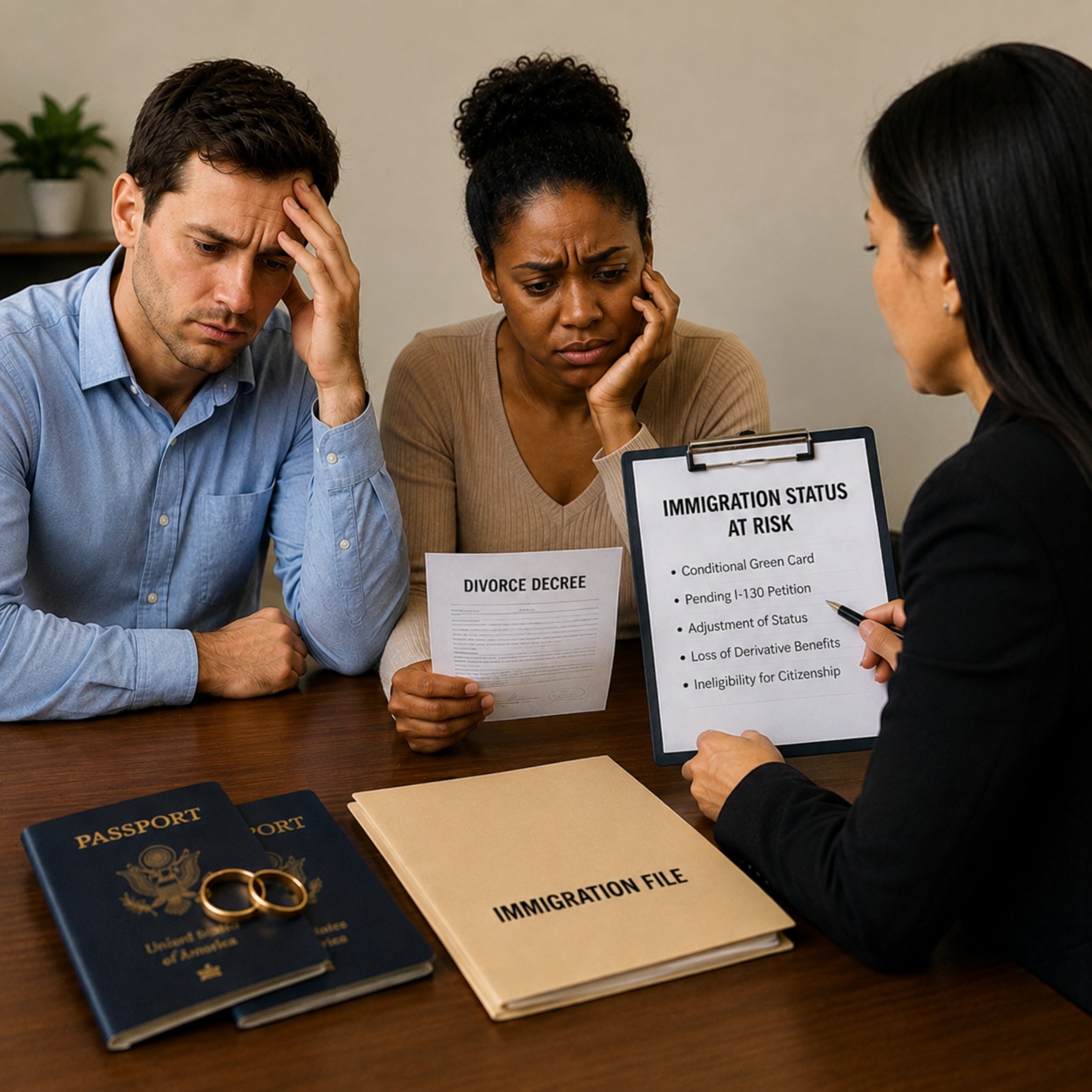
How Divorce Affects Your Immigration Status or Pending Green Card Application
Divorce is never easy. When your ability to remain in the United States is tied to your marriage, the emotional strain can quickly become a legal concern. A pending immigration petition, conditional green card, or dependent visa may all be affected when a marriage ends, but the consequences depend on where you are in the immigration process and the type of status you currently hold.
The good news is that divorce does not automatically mean you will lose your immigration status. In many situations, options remain available, especially if you understand your rights and take action before making major legal decisions.
If you’re considering separation or divorce, it’s important to understand how family law and immigration law intersect before taking the next step. The following overview is based on the source material provided.
Divorce vs. Separation: Why the Difference Matters
Many people use the terms divorce and separation interchangeably, but they are not the same under the law.
A divorce legally ends a marriage. Once the court enters a final divorce decree, the marital relationship is terminated.
A separation, on the other hand, generally means spouses are living apart while remaining legally married. Depending on the state, legal separation may have different legal consequences, and in some jurisdictions it may eventually lead to divorce.
For immigration purposes, U.S. Citizenship and Immigration Services (USCIS) and the Board of Immigration Appeals evaluate the legal effect of your marital status under applicable state law. Because immigration consequences can vary, understanding the legal status of your relationship before filing for divorce is critical.
Does Divorce Automatically Affect Your Immigration Status?
Not always.
Whether divorce changes your immigration status depends on several factors, including:
- Your current immigration status
- Whether your green card is conditional or permanent
- Whether you have a pending immigration application
- Your spouse’s immigration status
- When the divorce occurs during the immigration process
Two individuals going through similar divorces may experience very different immigration outcomes depending on these circumstances.
If You Already Have a Permanent Green Card
If you already hold a 10-year permanent green card, divorce generally does not cancel your lawful permanent resident status.
However, divorce may affect your path to U.S. citizenship.
Many permanent residents who remain married to a U.S. citizen may qualify to apply for naturalization after three years. If the marriage ends before naturalization, that accelerated timeline may no longer apply, and you may instead need to satisfy the standard five-year residency requirement.
When you later apply for citizenship, USCIS may also review the circumstances surrounding your marriage to determine whether it was entered into in good faith. Maintaining documentation showing your marriage was genuine can become important if questions arise during the naturalization process.
If You Have a Conditional Green Card
The situation is different for individuals who received a conditional green card through a marriage that was less than two years old when permanent residence was granted.
Conditional permanent residence is valid for two years. Ordinarily, both spouses file Form I-751, Petition to Remove Conditions on Residence, together before the card expires.
If divorce occurs before that filing, the process becomes more complicated—but not necessarily impossible.
The source explains that applicants may still seek to remove the conditions by requesting a waiver of the joint filing requirement. To qualify, they must demonstrate that the marriage was entered into in good faith rather than for immigration purposes.
Helpful evidence may include:
- Joint bank account records
- Shared leases or mortgage documents
- Insurance policies
- Photographs
- Credit accounts
- Other records showing the couple built a genuine married life together
Although divorce increases the scrutiny applied to these cases, it does not automatically prevent an applicant from becoming a permanent resident.
Divorce Before Your I-130 Is Approved
Timing matters.
If your spouse filed Form I-130, Petition for Alien Relative, and the marriage ends before USCIS approves that petition, the immigration process can stop immediately.
According to the source, once the marriage legally ends, the basis for the family-based petition generally no longer exists. USCIS may revoke or deny the petition because eligibility depended on the marital relationship.
If you do not have another lawful basis for remaining in the United States, you may need to explore other immigration options that are independent of your former spouse.
Divorce While Adjustment of Status Is Pending
A pending adjustment of status application can also be affected by divorce.
If you are applying for permanent residence as the spouse of a U.S. citizen, a divorce while the adjustment application is pending may prevent approval because the underlying marriage petition no longer supports the application.
For spouses of lawful permanent residents, the legal analysis may differ depending on the circumstances and the stage of the immigration process. As the source explains, the timing of the divorce and changes in the sponsoring spouse’s immigration status may significantly influence the available options.
Because these cases often involve complex procedural issues, obtaining legal advice before finalizing a divorce can be one of the most important decisions an immigrant spouse makes.
Conditional vs. Permanent Green Cards After Divorce
The impact of divorce often depends on the type of green card you hold.
If you have a conditional green card, ending the marriage before filing Form I-751, Petition to Remove Conditions on Residence, creates additional legal requirements. Instead of filing a joint petition with your spouse, you may request a waiver that allows you to file independently. To succeed, you’ll need to demonstrate that the marriage was entered into in good faith, even though it ultimately ended in divorce.
Evidence commonly used to support this type of filing includes joint financial records, lease or mortgage agreements, insurance policies, photographs, correspondence, birth certificates of children, and affidavits from people familiar with your relationship. The stronger the documentation, the easier it becomes to establish that the marriage was genuine.
If you already have a 10-year permanent green card, the situation is generally much different. Divorce alone does not cancel your lawful permanent resident status. However, if you planned to apply for U.S. citizenship under the shorter three-year residency rule available to certain spouses of U.S. citizens, you may instead need to satisfy the standard five-year residency requirement.
Protection for Immigrants Experiencing Abuse
Some immigrants remain in abusive marriages because they fear losing their immigration status. The law recognizes this concern and provides important protections.
Under the Violence Against Women Act (VAWA), eligible spouses of U.S. citizens or lawful permanent residents may be able to file a self-petition without relying on the abusive spouse’s cooperation. The process is confidential, and the abusive spouse does not need to participate or even be informed of the filing.
According to the source, applicants may qualify if they entered the marriage in good faith, experienced battery or extreme cruelty, meet certain moral character requirements, and satisfy other eligibility criteria. Supporting evidence may include police reports, medical records, protective orders, counseling records, witness statements, and personal declarations describing the abuse.
Steps to Take Before Finalizing a Divorce
If your immigration status depends on your marriage, timing can be critical.
Before taking legal action, consider these important steps:
- Speak with an experienced immigration attorney before the divorce is finalized.
- Gather documents showing your marriage was genuine, including financial records, photographs, correspondence, and other shared records.
- If you have a conditional green card approaching expiration, do not miss the deadline to file Form I-751.
- If you are experiencing abuse, seek legal protection and explore immigration options that may be available under federal law.
In many situations, obtaining legal advice before finalizing a divorce can preserve immigration options that may no longer exist after the divorce becomes final.
Protect Your Immigration Future with Mokolo Law Firm
A divorce can change your family life, but it should not leave you uncertain about your future in the United States. Immigration laws are complex, and the timing of a divorce, the type of immigration benefit you have, and the stage of your case can all affect your legal options.
At Mokolo Law Firm, we understand that immigration and family law often overlap in ways that create difficult legal and personal decisions. Whether you’re dealing with a pending marriage-based petition, a conditional green card, an adjustment of status application, or concerns about maintaining lawful status after divorce, our legal team is prepared to help you understand your rights and develop a strategy tailored to your situation.
We assist clients with marriage-based immigration matters, waivers, USCIS filings, removal of conditions on residence, and other complex immigration issues arising from separation or divorce.
If your marriage is ending and you’re concerned about how it may affect your immigration status, don’t wait until a missed deadline or denied application limits your options. Contact Mokolo Law Firm today to schedule a confidential consultation. We’ll evaluate your case, explain your legal rights, and help you pursue the strongest path forward.
Final Thoughts on How Divorce Affects Your Immigration Status or Pending Green Card Application
The end of a marriage does not always mean the end of your immigration journey. While divorce can affect certain immigration benefits, the law also provides protections for many individuals, including those with permanent resident status, conditional residents who can demonstrate a good-faith marriage, and survivors of domestic abuse.
The most important step is understanding how your specific immigration status may be affected before major legal decisions are made. Acting early can preserve valuable rights, prevent avoidable delays, and open immigration pathways that might otherwise be lost.
If your immigration status is connected to your marriage, don’t rely on assumptions or informal advice. A careful legal review of your situation can make a significant difference in protecting both your future and your ability to remain in the United States.
 by Mokolo Law
Marriage-Based Green Card Process: Timeline and Requirements
Bringing your spouse to the United States is an exciting milestone, but the legal process involved can feel overwhelming. Marriage-Based Green Card Process: Timeline and Requirements explains the key steps, eligibility requirements, supporting documentation, and expected timeline for obtaining a marriage-based green card. From completing government forms to preparing for the immigration interview, understanding the process can help you avoid unnecessary delays and move your case forward with confidence.
A marriage-based green card allows the spouse of a U.S. citizen or lawful permanent resident (LPR) to live and work permanently in the United States. While the process follows a defined legal path, the timeline varies depending on several factors, including your spouse’s immigration status and whether the applicant is already in the United States or applying from abroad.
Understanding each stage of the process can help you avoid unnecessary delays and prepare a stronger application from the outset. The following overview is based on the source material provided.
Who Can Apply for a Marriage-Based Green Card?
A marriage-based green card is available to the foreign spouse of a U.S. citizen or lawful permanent resident. Before beginning the application, several eligibility requirements must be satisfied.
Generally, applicants must demonstrate that:
- The marriage is legally valid.
- The relationship is genuine and not entered into solely for immigration purposes.
- The sponsoring spouse is either a U.S. citizen or a lawful permanent resident.
- Any previous marriages have been legally terminated before the current marriage took place.
Meeting these requirements is only the first step. Applicants must also provide supporting documentation that establishes both the legality of the marriage and the authenticity of the relationship.
Understanding the Green Card Timeline
No two immigration cases are exactly alike. Processing times vary depending on the sponsor’s immigration status and the pathway used to obtain permanent residence.
If the sponsoring spouse is a U.S. citizen, the process generally moves more quickly because an immigrant visa is immediately available. In many cases, applicants may also qualify for concurrent filing, allowing certain applications to be submitted together.
If the sponsoring spouse is a lawful permanent resident, additional waiting periods may apply because immigrant visas become available according to federal immigration quotas.
Applicants should also understand the difference between the two primary processing methods:
- Adjustment of Status for individuals already lawfully present in the United States.
- Consular Processing for applicants living outside the United States.
Choosing the correct path is one of the most important decisions made early in the immigration process.
Step One: Filing Form I-130
The immigration process typically begins with Form I-130, Petition for Alien Relative.
This petition is filed by the sponsoring spouse to establish the qualifying family relationship and demonstrate that the marriage is legitimate. USCIS reviews the application carefully, paying close attention to the evidence submitted in support of the petition.
Although every case is unique, applicants should generally be prepared to provide:
- A valid marriage certificate
- Proof of the sponsoring spouse’s U.S. citizenship or lawful permanent resident status
- Birth certificates
- Passport identification documents
- Evidence that previous marriages have legally ended
- Documents demonstrating a genuine marital relationship
Examples of supporting evidence may include joint bank accounts, shared leases or mortgages, photographs together, insurance policies, tax records, and other documents reflecting a shared life.
Submitting a complete and well-organized petition from the beginning can help reduce requests for additional evidence and minimize unnecessary processing delays.
Proving That Your Marriage Is Genuine
One of the most closely examined aspects of every marriage-based immigration case is whether the marriage is bona fide.
Immigration officials are responsible for identifying fraudulent marriages entered into solely for immigration benefits. Because of this, applicants should be prepared to present evidence showing that they have built a real life together.
Useful documentation often includes:
- Joint financial accounts
- Mortgage or lease agreements listing both spouses
- Utility bills
- Insurance policies
- Family photographs
- Affidavits from relatives or friends
- Travel records
- Other documents demonstrating shared responsibilities and day-to-day life
The stronger the documentation, the easier it becomes to establish the authenticity of the relationship during the review process and any subsequent interview.
Preparing Before You File
Many delays occur long before USCIS begins reviewing an application.
Incomplete forms, missing supporting documents, inconsistent information, and incorrect filing procedures can all result in requests for additional evidence or extended processing times.
Before submitting any immigration paperwork, applicants should carefully organize their documents, verify that every required form has been completed accurately, and confirm that filing fees and supporting evidence satisfy current USCIS requirements.
Proper preparation at the beginning of the process often makes the remainder of the application significantly smoother and reduces the likelihood of avoidable setbacks.
Step Two: Adjustment of Status or Consular Processing
Once the initial petition is underway or approved, the next stage depends largely on where the foreign spouse is living.
If the applicant is already in the United States and eligible to apply from within the country, the process generally involves filing Form I-485, Application to Register Permanent Residence or Adjust Status. Applicants may also need to attend a biometrics appointment and provide medical, identity, immigration, and financial-support documentation.
For spouses living outside the United States, the case generally proceeds through consular processing. This involves the National Visa Center, Form DS-260, supporting civil and financial documents, a medical examination, and ultimately an interview at the appropriate U.S. embassy or consulate.
Preparing for the Marriage Green Card Interview
The interview is an important part of the process. Immigration officials may ask questions about the relationship to determine whether the marriage is genuine.
Couples should review their application beforehand and be familiar with the information and documents already submitted. Questions may touch on how the relationship developed, living arrangements, shared finances, family life, and plans.
There is no benefit in memorizing scripted answers. Consistency and truthfulness matter more. Significant contradictions between an application, supporting evidence, and interview responses can raise concerns and lead to additional scrutiny.

Work and Travel While Your Application Is Pending
Applicants pursuing adjustment of status may have options for obtaining permission to work while their green card application is pending.
Form I-765 is used to request employment authorization. Eligible applicants who receive an Employment Authorization Document can work legally while waiting for their permanent residence application to be decided.
Travel requires separate consideration. The source explains that applicants may request Advance Parole through Form I-131 before traveling outside the United States while an adjustment application is pending. Leaving without the appropriate authorization may jeopardize the pending application in circumstances where it is treated as abandoned.
What Happens If You Receive a Conditional Green Card?
If permanent residence is granted when the marriage is less than two years old, the immigrant spouse generally receives conditional permanent resident status rather than a standard 10-year green card.
That status is valid for two years.
Removing those conditions generally requires filing Form I-751, Petition to Remove Conditions on Residence, during the required filing period. USCIS may again examine evidence showing that the marriage was genuine rather than entered into solely to obtain immigration benefits.
For this reason, couples should continue maintaining records of their life together even after the initial green card is approved.
Mistakes That Can Complicate a Marriage-Based Green Card Case
Some immigration problems are unavoidable. Others begin with relatively simple mistakes.
Incomplete applications, missing documents, inconsistencies between forms, weak evidence of a bona fide marriage, and failing to respond promptly to a Request for Evidence can slow the case or create more serious problems.
Financial requirements also deserve attention. The sponsoring spouse may be required to submit Form I-864, Affidavit of Support, along with documents demonstrating sufficient financial resources.
A marriage may be completely genuine and an applicant otherwise eligible, but that doesn’t make paperwork errors harmless. Careful preparation matters.
Protect Your Immigration Future With Mokolo Law Firm
A marriage-based green card represents far more than permission to remain in the United States. For many couples, it determines whether they can build their lives together without immigration uncertainty hanging over their family.
At Mokolo Law Firm, we help individuals and families navigate marriage-based immigration matters with careful attention to the facts of each case. From preparing petitions and organizing supporting evidence to addressing USCIS requests and preparing for interviews, our goal is to help clients approach each stage with a clear legal strategy.
If complications arise, whether involving prior immigration history, insufficient documentation, questions about the marriage, a Request for Evidence, or another issue that could affect eligibility, getting legal advice early can prevent a manageable problem from becoming a serious obstacle.
If you are preparing to apply for a marriage-based green card, have received a notice from immigration authorities, or are concerned about the strength of an existing application, contact Mokolo Law Firm to schedule a confidential consultation. Let our legal team evaluate your circumstances, explain your options, and help you pursue permanent residence with the preparation your case deserves.
Final Thoughts on Marriage-Based Green Card Process: Timeline and Requirements
Marriage-based immigration is deeply personal, but the government process is anything but informal. Every form, supporting document, deadline, and interview becomes part of the record USCIS uses to decide the case. A strong application isn’t one buried beneath unnecessary paperwork. It tells a clear, consistent story and supports that story with credible evidence.
Start early. Keep good records. Pay attention to the details, and don’t assume that a genuine marriage guarantees an uncomplicated immigration process.
The goal isn’t simply to submit an application. It’s to put forward a case that accurately reflects your marriage and gives immigration authorities what they need to make a decision.
Frequently Asked Questions
How long does a marriage-based green card take?
There is no single timeline that applies to every applicant. Processing depends on factors including whether the sponsor is a U.S. citizen or lawful permanent resident, where the foreign spouse lives, visa availability, USCIS workload, and whether additional evidence is requested.
What evidence can prove that our marriage is genuine?
Evidence can include joint bank statements, shared leases or mortgages, photographs, insurance records, financial documents, and other records demonstrating a shared life and genuine relationship.
Can I work while waiting for my marriage-based green card?
Applicants pursuing adjustment of status may be eligible to request employment authorization using Form I-765 while their application remains pending.
Can I leave the United States while my application is pending?
Travel can affect a pending adjustment application. The source discusses requesting Advance Parole through Form I-131 before traveling and warns that leaving without appropriate authorization may result in the application being treated as abandoned in applicable circumstances.
What happens if USCIS requests more evidence?
USCIS may issue a Request for Evidence when additional information or documentation is needed before a decision can be made. Applicants should take the request seriously and provide an accurate response within the required timeframe.
Will I receive a 10-year green card immediately?
It depends on how long the marriage has existed when permanent residence is granted. The source explains that spouses who have been married for less than two years generally receive conditional residence, while those whose marriage has exceeded two years may receive a 10-year permanent resident card.
What happens if my marriage-based petition is denied?
A denial notice should explain the basis for the decision. Depending on the circumstances, options may include challenging the decision or filing again with stronger documentation. The appropriate response depends on the specific reason for denial.
Do I need an immigration attorney for a marriage-based green card?
Applicants can pursue the process without private counsel, but the source emphasizes that the forms, supporting documentation, Requests for Evidence, and other complications can make the process difficult to navigate without legal guidance.
 by Mokolo Law
EB-5 Visa for High-Net-Worth Families
EB-5 Visa for High-Net-Worth Families. Learn how the EB-5 Immigrant Investor Program provides a pathway to U.S. residency through qualifying investments.
 by Mokolo Law
J-1 Visa Options for International Physicians in Texas
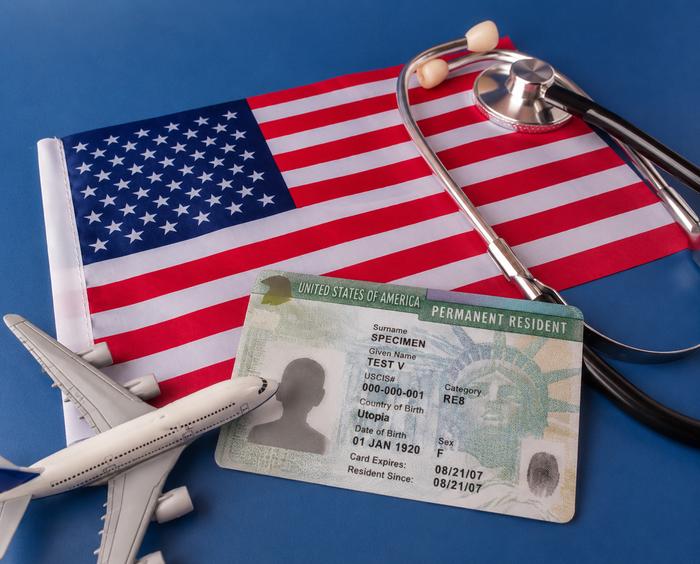
For many international physicians, the J-1 visa opens the door to graduate medical training in the United States. If you are exploring J-1 Visa Options for International Physicians in Texas, understanding the available pathways and requirements is essential for planning your medical career. The J-1 visa allows talented doctors from around the world to complete residency and fellowship programs, gain valuable clinical experience, and help address physician shortages across Texas.
Yet as training nears completion, a more pressing question emerges: What happens next?
For physicians in Texas, the answer depends on long-term career goals, immigration strategy, and compliance with federal regulations. While the J-1 exchange visitor program creates opportunities, it also comes with limitations that can significantly affect where and how a physician practices after residency.
Understanding the available options early can make the difference between a smooth transition and an unexpected interruption in your medical career.
Understanding the J-1 Home Residency Requirement
Most international physicians who complete residency or fellowship training under a J-1 visa become subject to the two-year foreign residence requirement under Section 212(e) of the Immigration and Nationality Act.
This rule generally requires the physician to return to their home country for at least two years before becoming eligible for certain U.S. immigration benefits, including:
- H-1B status
- Permanent residency (green card)
- Adjustment of status within the United States
For many physicians who have established careers, families, and professional relationships in Texas, returning home for two years is often not the preferred option.
Fortunately, several pathways may allow physicians to remain in the United States without fulfilling the foreign residence requirement first.
The Conrad 30 Waiver Program
The Conrad 30 Waiver Program remains one of the most common options available to international physicians completing training in Texas.
Under this program, each state may sponsor up to 30 physicians annually for a waiver of the two-year home residency requirement.
In exchange, the physician agrees to work in a medically underserved area or health professional shortage area.
Texas has long faced physician shortages in many rural and underserved communities. As a result, Conrad 30 opportunities can be found throughout the state, particularly in regions where access to healthcare remains limited.
To qualify, physicians generally must:
- Secure a qualifying full-time employment offer
- Agree to provide medical services for a specified period
- Obtain support from the relevant state agency
- Meet federal immigration requirements
After approval, physicians typically transition to H-1B status and begin working under the terms of the waiver agreement.
Competition for waiver slots can be significant, making careful planning essential.
Federal Agency Waivers
Some physicians may qualify for waivers through federal government agencies rather than state-sponsored programs.
These waivers are less common but can be valuable in the right circumstances.
Agencies that may sponsor waivers include:
- The Department of Veterans Affairs (VA)
- The Department of Health and Human Services (HHS)
- Certain federal research institutions
Eligibility depends largely on the physician’s specialty, employment setting, and the public interest served by their work.
Federal agency waivers often involve unique requirements and extensive documentation, making experienced legal guidance particularly important.
Interested Government Agency (IGA) Waivers
An Interested Government Agency waiver allows a federal agency to request that the physician remain in the United States because their continued service benefits the public.
This option is frequently used in situations involving:
- Medical research
- Public health initiatives
- Specialized healthcare services
- Government-sponsored programs
Physicians engaged in research or academic medicine may find this route particularly attractive.
However, approval standards can be highly technical and agency-specific.
Exceptional Hardship Waivers
In limited circumstances, a physician may seek a waiver based on exceptional hardship to a U.S. citizen or lawful permanent resident spouse or child.
The hardship must extend beyond the normal emotional and financial difficulties associated with family separation.
Factors commonly considered include:
- Serious medical conditions
- Educational disruption
- Psychological hardship
- Economic consequences
- Country-specific conditions abroad
These cases require substantial evidence and detailed legal arguments. Approval is never automatic, even where genuine hardship exists.
Persecution-Based Waivers
Physicians who can demonstrate a well-founded fear of persecution in their home country may qualify for another waiver option.
Claims generally involve concerns related to:
- Political opinion
- Religion
- Nationality
- Race
- Membership in a particular social group
Because these cases often overlap with asylum-related issues, they require careful preparation and strategic legal analysis.
Transitioning to H-1B Status
For many physicians, obtaining a J-1 waiver is only the first step.
The next phase often involves securing H-1B status.
Unlike many other professionals, physicians working through waiver programs may qualify for cap-exempt H-1B employment depending on the sponsoring institution and practice setting.
H-1B status offers several advantages:
- Authorization to practice medicine in the United States
- Dual intent benefits
- Potential pathway toward permanent residency
- Greater long-term career stability
The timing of the H-1B filing is critical. Delays can affect employment authorization and create avoidable immigration complications.
Permanent Residency Options for Physicians
Many international physicians eventually pursue lawful permanent residence.
Several employment-based pathways may be available.
PERM Labor Certification
Traditional employer-sponsored green card cases often begin with the PERM labor certification process.
This route requires employer sponsorship and extensive recruitment procedures.
National Interest Waiver (NIW)
Physicians providing medical services in underserved areas may qualify for a National Interest Waiver.
The NIW can eliminate the labor certification requirement and accelerate the path toward permanent residency.
This option has become increasingly attractive for physicians committed to serving communities facing healthcare shortages.
Physician National Interest Waiver
Certain physicians who agree to work full-time in designated shortage areas for a required period may qualify for a specialized physician NIW pathway.
For many doctors, this represents one of the most efficient routes to a green card.
Why Early Planning Matters
One of the biggest mistakes physicians make is waiting until the final year of residency to evaluate immigration options.
By that point, waiver deadlines, employment negotiations, and visa processing timelines may already be creating pressure.
Immigration planning should begin well before training ends.
The strongest cases are often built months or even years in advance.
Employment contracts should be reviewed carefully. Sponsorship obligations should be clearly understood. Long-term immigration goals should align with professional opportunities.
A physician’s career is too important to leave to guesswork.

How Mokolo Law Firm Can Help
The immigration decisions you make at the end of residency can affect where you practice, where your family lives, and how quickly you achieve permanent residency.
Whether you are exploring a Conrad 30 waiver, evaluating H-1B sponsorship opportunities, pursuing a National Interest Waiver, or developing a long-term immigration strategy, experienced legal guidance can help you avoid costly mistakes.
At Mokolo Law Firm, we work with international physicians across Texas to develop practical immigration solutions tailored to their professional goals. We understand the challenges foreign-trained doctors face because we handle these cases every day.
A missed deadline, a poorly structured employment agreement, or an overlooked immigration requirement can delay a physician’s career for years. Proper planning can prevent those problems before they arise.
If you are completing residency or fellowship training and need guidance on your next immigration step, contact Mokolo Law Firm today to schedule a confidential consultation. The decisions you make now will shape your future in the United States. Make sure you have experienced legal counsel helping you make them.
Final Thoughts on J-1 Visa Options for International Physicians in Texas: What Comes Next After Residency?
International physicians play a vital role in Texas healthcare. They staff rural hospitals, serve underserved communities, conduct groundbreaking research, and provide care where physician shortages remain a serious concern.
The challenge is that immigration law rarely moves as smoothly as a medical career.
A J-1 visa may have brought you to Texas, but it does not have to determine how your story ends. Several options may allow you to continue practicing medicine, build a permanent future, and pursue long-term immigration goals without interrupting the career you worked so hard to achieve.
Every physician’s situation is different. The right strategy depends on your specialty, employer, family circumstances, and professional ambitions.
What remains constant is the value of planning. When immigration decisions are made thoughtfully and early, physicians place themselves in the strongest possible position to continue serving patients while building a future in the United States.